
Ultimate Keysearch Review: Best For Bloggers in 2025

Welcome to my journey exploring Keysearch reviews; this tool remains affordable and user-friendly, but there are hidden gems and advanced strategies that can multiply your blogging success.
Beyond basic keyword research and rank tracking, we’ll uncover professional techniques that separate successful bloggers from the crowd.
Let’s dive in and explore advanced Tips & Tricks for maximum SEO impact in this Ultimate Keysearch review.
Key Takeaways
- Master the Keyword Difficulty Sweet Spot: Target keywords with difficulty scores between 20-40 for the best balance of traffic potential and ranking feasibility
- Leverage Seasonal Keyword Planning: Use Keysearch’s historical data to plan content 3-6 months ahead of trending seasons
- Advanced Competitor Reverse Engineering: Extract your competitors’ content gaps and capitalize on their missed opportunities
- Multi-Platform Keyword Strategy: Sync your Keysearch data with Pinterest, YouTube, and social media for omnichannel content success
- ROI-Focused Keyword Selection: Calculate potential earnings per keyword using CPC data and conversion estimates
Why Keysearch Outperforms Expensive Alternatives?

While your original review highlighted affordability, let’s dive deeper into why Keysearch often delivers better results than tools costing 5x more. The secret lies in its focused feature set and blogger-centric design philosophy.
While your original review highlighted affordability, let’s dive deeper into why Keysearch often delivers better results than tools costing 5x more.
The secret lies in its focused feature set and blogger-centric design philosophy.
The “Less is More” Advantage
Unlike bloated enterprise tools, Keysearch concentrates on the 20% of features that deliver 80% of results. This focus helps bloggers make quicker, more informed decisions without being overwhelmed by excessive data.
- Simplify Your Workflow: Embrace Keysearch’s streamlined interface which minimizes analysis paralysis.
- Focus on Actionable Data: Utilize the clean data presentation that highlights only the most crucial insights for ranking.
- Accelerate Learning: Benefit from the lower learning curve, getting you from beginner to ranking professional faster.
Hidden Cost Savings
Beyond the obvious price difference, Keysearch saves money by consolidating essential SEO functionalities into a single platform
- Consolidate Subscriptions: Eliminate the need for multiple, expensive tool subscriptions by leveraging Keysearch’s integrated features.
- Reduce Training Time: Minimize the time investment required to learn complex enterprise interfaces.
- Optimize Plugin Usage: Utilize Keysearch’s built-in features to reduce reliance on additional, often paid, SEO plugins.
Ultimate Keysearch Review: Advanced Features Deep Dive
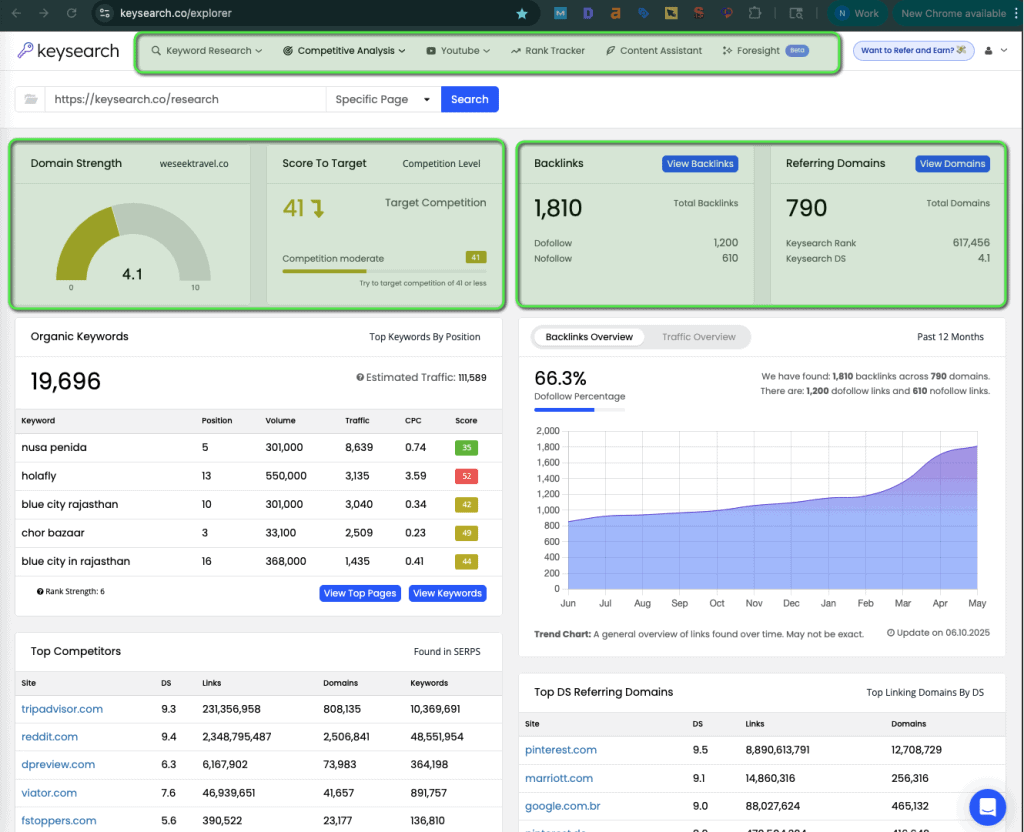
Keysearch offers powerful features that, when explored beyond their basic functions, can unlock significant SEO advantages for your blog.
Smart Keyword Research Strategies
Move beyond simply finding keywords to strategically grouping and identifying high-potential opportunities that competitors miss.
The Cluster Method Instead of researching keywords individually, use this advanced approach:
Step 1: Start with a Primary Seed Keyword: Begin your research with a broad topic relevant to your niche.
Step 2: Export Related Suggestions: Within Keysearch, export a large list (aim for 200-500) of related keywords generated from your seed.
Step 3: Group by Search Intent: Analyze Keysearch’s suggestion patterns and group keywords that share similar user intent or topics.
Step 4: Create Content Clusters: Develop comprehensive pieces of content designed to target these keyword groups simultaneously, ensuring thorough coverage of a sub-topic.
Competition Gap Analysis
This professional technique uncovers lucrative keyword opportunities by identifying terms for which your competitors rank, but your site currently does not.
Here’s a pro technique most bloggers miss:
- Analyze Top Competitors: Use Keysearch to analyze the keyword profiles of your top 3 direct competitors in your niche.
- Export Ranking Keywords: Download their comprehensive lists of keywords for which they currently rank.
- Cross-Reference Your List: Compare their ranking keywords against your own site’s current keyword rankings.
- Identify & Prioritize Gaps: Pinpoint the “opportunity keywords” where competitors rank but you don’t, then prioritize these for quick content wins.
Long-tail Goldmining
Employ creative search techniques within Keysearch to uncover highly specific, often less competitive, long-tail keywords that attract highly qualified traffic.
Use Keysearch’s suggestion engine creatively:
- Enter Partial Phrases with Asterisks: Use wildcards (e.g., “best * for beginners”) to explore broad long-tail variations.
- Look for Question-Based Keywords: Filter or specifically search for queries containing “who,” “what,” “when,” “where,” “why,” and “how,” which often indicate high intent.
- Target “Vs” Comparison Keywords: Identify terms like “product A vs product B,” which are often used by users close to a purchasing decision.
- Focus on Location-Based Long-tails: Incorporate city or neighborhood names for local SEO dominance (e.g., “best vegan restaurants in [City]”).
Advanced Rank Tracking Techniques
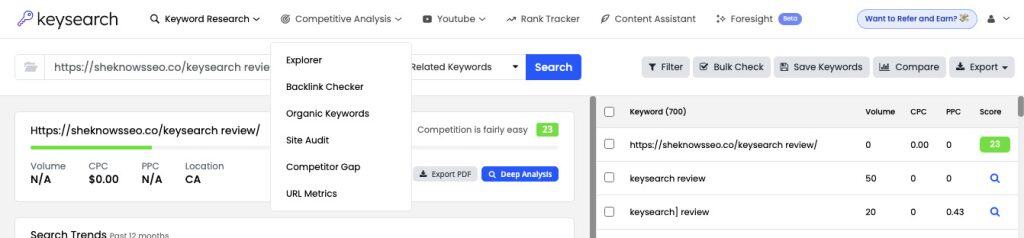
Beyond simply monitoring your position, these techniques allow you to understand the dynamics of your rankings and respond strategically.
Velocity Tracking
Monitor not just rankings, but ranking velocity:
- Set Weekly Tracking: Configure weekly rank tracking for all new content you publish.
- Identify Upward Momentum: Look for keywords showing consistent week-over-week improvements in ranking.
- Double-Down on Gaining Content: Invest more in internal linking, promotion, or content expansion for pages that are showing positive velocity.
- Pivot Stagnant Keywords: After 90 days, if a keyword shows no significant movement, re-evaluate its strategy or pivot resources.
Seasonal Ranking Patterns
Utilize Keysearch’s historical data to anticipate annual keyword trends, allowing for proactive content planning and sustained seasonal traffic.
Use historical data to your advantage:
- Track Seasonal Keywords Year-over-Year: Add keywords relevant to specific seasons or holidays to your tracking list and observe their performance trends over multiple years.
- Identify Recurring Patterns: Note the exact periods when search volume and rankings for these keywords typically peak.
- Plan Publication Ahead: Schedule content publication 2-3 months before the anticipated seasonal peaks to allow for indexing and ranking.
- Create “Evergreen Seasonal” Content: Develop foundational content that can be updated annually rather than recreated, ensuring consistent seasonal rankings.
SERP Feature Tracking
Monitor your content’s appearance in various Google Search Engine Results Page (SERP) features, which can significantly boost visibility beyond organic rankings.
Monitor beyond just rankings:
- Monitor Featured Snippets: Track when your content earns the coveted featured snippet position at the top of search results.
- Note Image Pack Appearances: For visually rich content, observe if your images are appearing in Google’s image packs.
- Monitor “People Also Ask” Inclusion: Check if your content is providing answers for questions in the “People Also Ask” section.
- Optimize for Specific Features: Adjust your content structure (e.g., using precise answer boxes for snippets) to specifically target the SERP features most relevant to your niche.
Competitive Intelligence Mastery
Transform competitor analysis into actionable content and backlink strategies that give you a significant edge in your niche.
Content Gap Identification
Proactively identify what content competitors are abandoning or where they are strong, allowing you to create superior alternatives.
Transform competitor analysis into content strategy:
- Export Competitor Keyword Lists Monthly: Regularly download updated keyword rankings for your main competitors.
- Identify Abandoned Keywords: Look for keywords where competitors previously ranked well but have now dropped significantly or stopped ranking.
- Create Superior Content: Develop higher-quality, more comprehensive content targeting these “abandoned” keywords.
- Monitor New Content: Keep an eye on your competitors’ newly published content for emerging trend opportunities they are trying to capture.
Backlink Opportunity Mapping
Leverage competitor backlink profiles to identify potential linking partners for your own content, accelerating your authority building.
Use competitive data strategically:
- Identify Linking Domains: Use Keysearch’s competitor analysis to find sites that link to multiple of your competitors.
- Create Superior Content: Develop content that is objectively better, more detailed, or more up-to-date than the competitor content being linked.
- Outreach to Linking Sites: Contact these identified sites, politely highlighting your superior content as a more valuable resource.
- Build Topical Authority: Acquire relevant backlinks faster than starting from scratch, bolstering your domain authority and organic rankings.
Niche-Specific Advanced Strategies
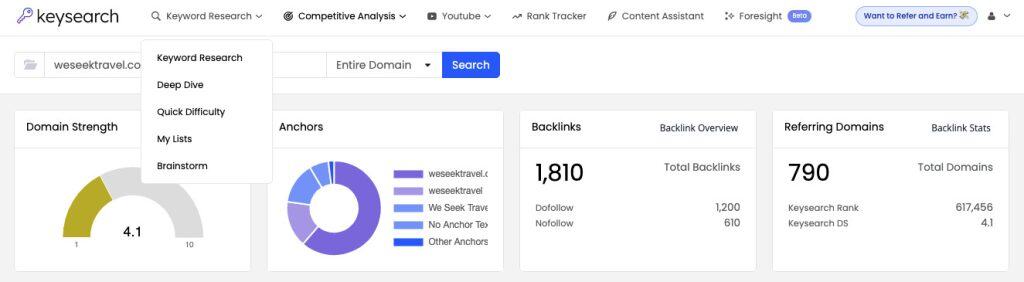
Tailoring your Keysearch approach to the unique characteristics of your blogging niche can unlock highly effective, targeted growth.
Travel Blogging Power Moves
Maximize your reach in the travel niche by strategically layering destination content and planning around key events.
Destination Layering Strategy
Instead of broad articles, create interconnected content webs that cover every aspect of a destination, establishing deep topical authority.
- Research Broad Destination Keywords: Start with high-level terms like “Southeast Asia travel guide.”
- Drill Down into Specifics: Use Keysearch to find keywords related to activities, seasons, budget ranges, and specific neighborhoods within that destination.
- Create Interconnected Content: Develop individual blog posts for each drilled-down keyword, linking them all back to a central “ultimate guide.”
- Boost Topical Authority: Use internal linking to strengthen the overall relevance and authority of your destination content.
Event-Based Content Planning
Capitalize on major travel events and seasonal peaks by planning content well in advance, ensuring you’re visible when demand surges.
- Track Event Keywords: Use Keysearch to monitor keywords related to travel events, festivals, and specific holiday seasons.
- Plan Content 6-8 Months in Advance: Schedule content publication to coincide with the lead-up to peak travel seasons, allowing ample time for indexing and ranking.
- Create “Ultimate Guide” Content: Develop comprehensive guides that target multiple related keywords around a specific event or season.
- Repurpose for Demographics: Adapt and re-promote your content for different travel seasons and target demographics.
Food Blogging Advanced Tactics
Leverage Keysearch to stay ahead of culinary trends and optimize for seasonal ingredients, ensuring your recipes are always discoverable.
Recipe Trend Forecasting
Use Keysearch to predict emerging food trends, allowing you to create relevant content before it becomes oversaturated.
- Monitor Ingredient-Specific Keyword Trends: Keep an eye on rising search volumes for particular ingredients.
- Track Dietary Restriction Keywords: Identify trending dietary needs (e.g., keto, vegan, gluten-free) to cater to specific audiences.
- Identify Emerging Cuisine Trends: Look for increases in search interest for new or niche cuisines.
- Create Comprehensive Collections: Develop recipe collections that target these emerging keyword clusters, positioning you as an early authority.
Seasonal Ingredient Optimization
Align your recipe content with the availability of seasonal ingredients to capture timely, high-intent search traffic.
- Plan Around Ingredient Seasonality: Research when specific fruits, vegetables, or other ingredients are in peak season.
- Target “What to Do With…” Keywords: Create content addressing common questions related to seasonal ingredients (e.g., “what to do with fresh cranberries”).
- Create Preservation Content: Develop guides on preserving and storing seasonal ingredients for off-seasons.
- Develop Signature Recipes: Create unique recipes that become searchable by name, building brand recognition.
Professional Integration Workflows
For maximum SEO impact, integrate Keysearch into your overall content strategy and leverage its data for continuous improvement.
The Data-Driven Content Calendar
Systematically plan your content around keyword opportunities, ensuring every piece is strategically aligned for maximum impact.
- Monthly Keyword Planning SessionMonthly Keyword Planning Session: Conduct a dedicated session to export top-performing keywords from the previous month and identify new seasonal opportunities.
- Research Competitor Gaps: Simultaneously research competitor content gaps to find untapped keyword potential.
- Plan Content Pieces: Based on your research, plan 12-16 pieces of content targeting different keyword clusters.
- Schedule Publication Dates: Strategically schedule publication dates based on seasonal trends and keyword difficulty.
Weekly Performance Reviews
Regularly review your content’s performance to make agile adjustments and capitalize on emerging opportunities.
- Monitor Rank Changes: Track weekly rank changes for all recently published content to identify immediate impacts.
- Identify Internal Linking Opportunities: Look for new opportunities to strengthen internal links between related content.
- Update Older Content: Revisit and update older content based on new keyword discoveries or changes in SERP features.
- Plan Social Media Promotion: Schedule social media promotion around content that is showing ranking improvements.
Advanced Tool Integration
Combine Keysearch with other powerful SEO tools to create a holistic data ecosystem.
Keysearch + Google Search Console Power Combo
This pairing allows you to uncover hidden keyword opportunities from your existing search performance.
- Export Impression Data: From Google Search Console (GSC), export impression data for pages ranking in positions 11-20.
- Research Opportunity Keywords: Import these keywords into Keysearch to analyze their difficulty, volume, and related terms.
- Optimize Existing Content: Use Keysearch’s insights to optimize your existing content, aiming to push these keywords into the top 10.
- Track Progress: Monitor your progress using Keysearch’s rank tracking feature.
Content Performance Scoring System
Develop a customized scoring system to objectively prioritize potential keywords based on multiple factors beyond just volume and difficulty.
Create your own scoring system:
- Define Scoring Criteria: Assign weights to factors like keyword difficulty (30%), search volume (25%), commercial intent/CPC (25%), and content gap opportunity (20%).
- Score Each Keyword: Apply your scoring system to every potential keyword identified through Keysearch.
- Prioritize Accordingly: Focus your content creation efforts on keywords with the highest overall performance scores.
Monetization-Focused Keyword Strategies
Align your keyword selection directly with your monetization goals to ensure your SEO efforts translate into tangible revenue.
Revenue-Driven Keyword Selection
Prioritize keywords that indicate a high likelihood of conversion, focusing your efforts where they will have the greatest financial impact.
CPC-Based Prioritization
Use Cost Per Click (CPC) data within Keysearch as a strong indicator of commercial intent, guiding you towards more profitable keywords.
- Sort Keywords by CPC: In Keysearch, sort your keyword lists by their average CPC value.
- Understand Commercial Intent: Recognize that a higher CPC often signals that advertisers are willing to pay more for clicks, indicating stronger commercial intent.
- Balance CPC with Difficulty: Aim for a balance between high-CPC keywords and those with achievable difficulty scores.
- Create Buying-Intent Content: Develop content specifically designed to capture users at the buying stage for high-value keywords.
Affiliate Marketing Optimization
Strategically target keywords that attract users ready to make a purchase through your affiliate links, maximizing your commissions.
- Target “Best [Product Category]” Keywords: These users are looking for recommendations and are close to buying.
- Research “Vs” Comparison Keywords: Identify terms like “product A vs. product B,” indicating users comparing options before purchase.
- Focus on “Review” and “Buying Guide” Terms: Create detailed reviews and comprehensive buying guides that include affiliate links.
- Track Conversion Rates: Monitor which keywords are driving the most affiliate conversions, refining your strategy based on actual sales data.
Scaling Strategies for Growing Blogs
As your blog grows, use Keysearch to strategically expand your authority and multiply your content efficiently.
The Authority Building Sequence
Build your domain authority methodically by targeting achievable keywords first, then leveraging those wins to compete for more challenging terms.
- Start with Low-to-Medium Competition: Focus on keywords with difficulty scores between 20-40 and medium search volume.
- Build Topical Clusters: Create comprehensive content clusters around these initial winning keywords.
- Gradually Target Higher Competition: As your domain authority increases from early wins, begin to target more competitive keywords within your established niches.
- Leverage Accumulated Authority: Use the authority you’ve built to compete effectively for high-value, high-volume terms.
Content Multiplication Strategy
Maximize your content output and topical authority by creating one comprehensive piece and then spinning off multiple related articles.
- Create a Comprehensive Piece: Develop a cornerstone content piece that targets a primary, broad keyword.
- Extract Related Subtopics: Identify 3-5 (or more) related subtopics within the main piece that could stand alone as individual blog posts.
- Link All Related Content: Ensure all individual subtopic posts extensively link back to the main comprehensive piece.
- Build Topical Authority Faster: This method allows you to rapidly build deep topical authority across a subject, outperforming competitors who only target individual keywords.
Troubleshooting Common Keysearch Challenges
Even with the best tools, challenges arise; knowing how to diagnose and adapt your strategy is crucial for long-term success.
When Keywords Don’t Rank as Expected
The 90-Day Rule
Give new content sufficient time to establish its presence in the search results before making drastic changes.
- Allow for Baseline Rankings: Give new content a minimum of 90 days to settle into its initial ranking positions.
- Build Supporting Signals: During this period, focus on building internal links to the new content and gathering social signals.
- Monitor for Movement: Track any movement, however small, to indicate Google’s indexing and initial assessment.
- Evaluate After 90 Days: Only pivot your content strategy or optimization efforts after this initial evaluation period.
Content Quality vs. SEO Balance
Ensure your data-driven optimizations don’t compromise the value and readability of your content for human readers.
- Inform, Don’t Dictate: Use Keysearch data to inform your content topics and structure, but never let it dictate the overall quality or natural flow of your writing.
- Provide Genuine Value: Ensure every piece of content provides true, comprehensive value beyond merely targeting keywords.
- Test Content Formats: Experiment with different formats (lists, guides, comparisons, tutorials) to see what resonates best with your audience.
- Monitor Engagement Metrics: Track user engagement metrics (bounce rate, time on page) alongside rankings to gauge content quality.
Handling Keyword Cannibalization
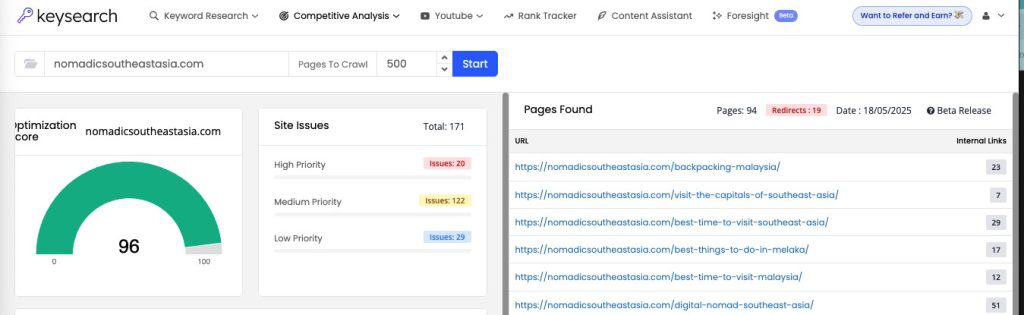
Identify and resolve instances where multiple pages on your site compete for the same keywords, which can dilute your SEO efforts.
Content Audit Protocol
Systematically review your site to prevent or fix keyword cannibalization, ensuring each page has a clear primary keyword target.
- Identify Overlapping Content: Use Keysearch and Google Search Console to identify multiple pages on your site ranking for, or targeting, very similar keywords.
- Decide on Strategy: Choose whether to merge these pages, implement 301 redirects, or distinctly differentiate their content and target keywords.
- Establish Hierarchy: Use internal linking to clearly establish which page is the most authoritative for a given keyword.
- Monitor Post-Changes: Track keyword rankings closely after implementing consolidation or differentiation changes.
Future-Proofing Your Keysearch Strategy
Stay agile and prepared for the ever-evolving landscape of search by diversifying your approach and anticipating emerging trends.
Adapting to Algorithm Changes
Build resilience into your SEO strategy to weather Google algorithm updates and maintain consistent traffic.
Diversification Strategy
Reduce reliance on single keywords and broad categories by building a robust and varied content portfolio.
- Never Rely on Single Keywords: Avoid putting all your traffic eggs in one basket; a diversified keyword portfolio is more resilient.
- Build Content Clusters: Focus on creating deep content clusters around broad topics, which can weather individual keyword fluctuations.
- Maintain a Mix of Short & Long-Tail: Target both high-volume short-tail keywords and more specific, lower-volume long-tail terms.
- Develop Email Lists: Build an email list to reduce your dependency on search engine traffic alone.
Emerging Trend Preparation
Proactively adapt to new search technologies and user behaviors that will shape the future of SEO.
- Monitor Voice Search Patterns: Use Keysearch to explore how queries are phrased for voice search.
- Track Mobile vs. Desktop Differences: Observe differences in search intent and ranking factors between mobile and desktop users.
- Prepare for Visual Search Optimization: Consider how images and video content can be optimized for visual search platforms.
- Understand AI Content Implications: Stay informed about how AI-generated content might impact keyword competition and content quality standards.
Advanced Metrics and KPIs
Beyond basic rankings, dive into a more sophisticated understanding of your blog’s performance to calculate true ROI and strategize for growth.
Beyond Basic Rankings
I recommend to adopt a holistic view of your keyword performance, moving beyond simple position tracking to evaluate the overall health and effectiveness of your keyword portfolio.
Keyword Portfolio Health Score Track these metrics monthly:
- Percentage in Top 10: Monitor the percentage of your target keywords that successfully rank in the top 10 positions.
- Average Ranking Position Improvement: Calculate the average rate at which your keyword rankings are improving over time.
- Keyword Diversity: Assess the breadth of your keyword targets across different topics and content types.
- Revenue Attribution: Track how much revenue can be directly attributed to specific keywords or content clusters.
Content ROI Calculation
Determine the genuine return on investment for your content creation efforts by aligning SEO metrics with financial outcomes.
- Time Invested: Document the time spent on keyword research for a piece of content.
- Content Creation Hours: Record the hours dedicated to writing, editing, and publishing the content.
- Traffic Generated: Track the organic traffic brought in by that specific piece of content.
- Revenue Attribution: Link the traffic to any conversions or revenue generated (e.g., ad clicks, affiliate sales, product purchases).
- Calculate True ROI: Compare the total investment (time and money) against the total revenue generated to determine the true ROI per keyword target or article.
Conclusion: Maximizing Your Keysearch Investment
The enhanced strategies in this guide transform Keysearch from a simple keyword tool into a comprehensive content strategy engine.
By implementing these advanced techniques, you’re not just competing with other bloggers – you’re operating at a professional level that most miss.
Remember that success with Keysearch, like any tool, comes from consistent application of proven strategies rather than sporadic attempts at optimization.
The bloggers who dominate their niches are those who treat keyword research as an ongoing strategic process, not a one-time task.
Start implementing these advanced techniques gradually.
Pick 2-3 strategies that align with your current blogging stage, master them, then expand your approach.
This methodical progression will compound your results over time and establish your blog as an authority in your chosen niche.
Your journey from casual blogger to SEO-savvy content creator starts with leveraging these professional-grade strategies.
The tools are in your hands – now it’s time to use them like a pro.
Frequently Asked Questions (FAQs)
How do I know if I’m using Keysearch to its full potential?
You’re maximizing Keysearch when you’re using it for strategic planning, not just keyword research. This means planning content 3-6 months ahead, tracking competitor movements monthly, and using keyword data to inform your entire content strategy rather than just individual posts.
What’s the biggest mistake bloggers make with Keysearch?
The most common mistake is treating keyword research as a one-time activity. Successful bloggers use Keysearch continuously – tracking performance weekly, updating content monthly, and adjusting strategy quarterly based on data trends.
How can I calculate the ROI of my Keysearch subscription?
Track the organic traffic increase from targeted keywords, calculate the advertising cost equivalent of that traffic, and factor in any revenue generated from organic visitors. Most serious bloggers see ROI within 60-90 days of implementing systematic keyword strategies.
Should I target high-competition keywords as a new blogger?
Start with medium-competition keywords (difficulty 20-40) where you can realistically rank within 3-6 months. Use early wins to build domain authority, then gradually target more competitive terms. This strategy builds momentum rather than frustration
How do I balance keyword optimization with natural writing?
Use keywords to guide your content topics and structure, but write primarily for your readers. Natural mention of keywords throughout comprehensive, valuable content typically outranks keyword-stuffed articles. Focus on search intent rather than keyword density.