Email Marketing For Bloggers: Growth Strategies In 2025

Imagine having email marketing nailed down to elevate your blogging strategy in 2025?
Reaching and connecting with your audience directly using effective email campaigns can dramatically amplify your audience, create a loyal readership, and promote high-quality engagement with your content.
Trying to figure out online resources can be intimidating and feel like being lost in an online ocean, but fear not!
In this ultimate guide, we’ll discuss the best Email Marketing tools for bloggers.
Discover valuable insights, cutting-edge strategies, and actionable tips directly from the mouths of industry-leading experts.
After reading this article, you’ll be able to write high-converting emails, segment your audience for maximum impact, and use effective tools to grow and widen your subscriber base to reach your blogging objectives.
Get ready to revolutionize your Email Marketing Campaigns and see concrete growth in your online business as a digital entrepreneur. 🚀
Key Takeaways
- Email marketing is a powerful way to connect with your audience and build trust. It’s all about sharing valuable content that keeps people engaged.
- Choosing the right email marketing platform like Mailchimp or HubSpot can really make a difference in your campaigns. Don’t ignore their features – explore them!
- Testing your email strategies is key to finding what works. Don’t be shy to experiment with formats and content because what works for one might not work for another.
- Quality content is essential for effective email marketing. Share tips, stories, and insights that resonate with your audience to strengthen your connection and keep them coming back.
Our expertise in **Elevate Your Digital Blogging Business** shows that having the right tools and strategies can fuel your journey.
We provide essential guidance to make your email campaigns not just better but also easier to handle.
Email Marketing for Bloggers: Must-Have Resources

While many still underestimate the power of Email today, the figures speak for themselves. As per Forbes, around 88% of people engage with their email on a daily basis.
There is huge opportunity for Digital Entrepreneurs, as Email Marketing remains one of the most powerful media for audience interaction and engagement.
Bloggers in particular can derive great benefit from being informed by leading email marketing blogs.
These tools offer abundant resources of creative inspiration, successful strategies, and easy-to-adopt email marketing templates and materials, without coding capabilities
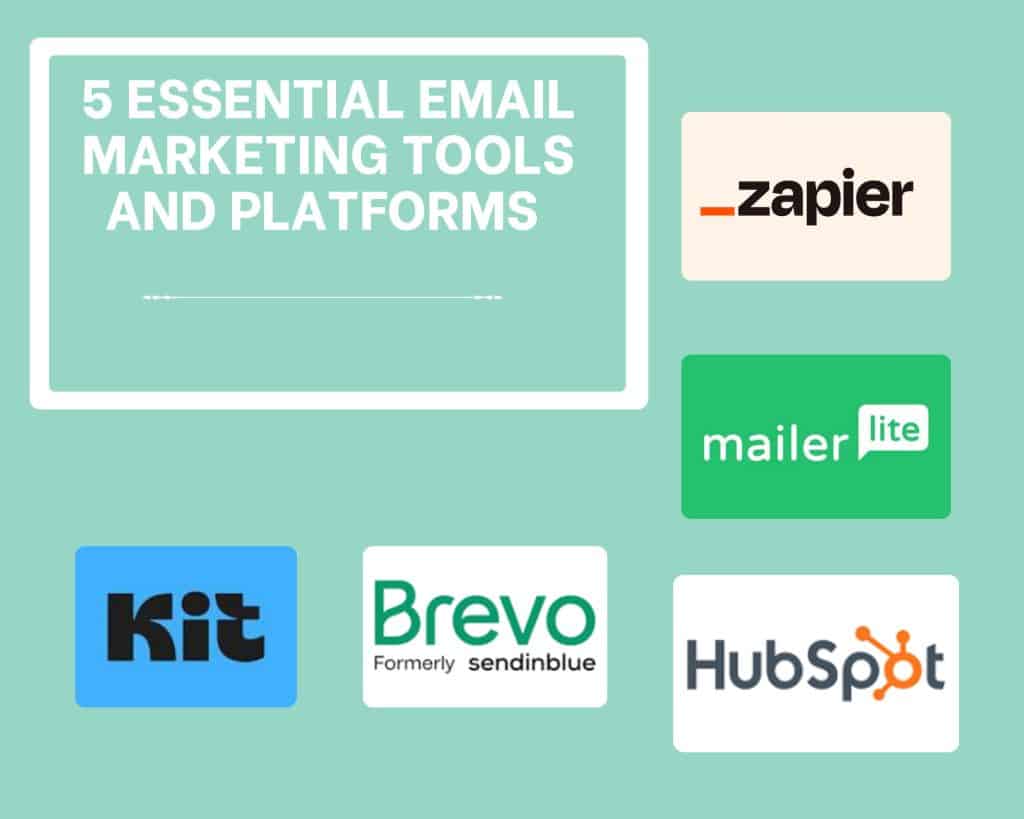
5 Essential Email Marketing Tools and Resources
For anyone aiming to boost their online presence, learning about the latest tools and resources is crucial.
Blogs that cover Email Marketing often share detailed insights into platforms that streamline your workflow and boost your efficiency.
Several industry leaders like Zapier, Kit (formerly Convert), Brevo, MailerLite, and HubSpot have shown how combining no-code automation with smart templates can cut down on time spent on routine tasks while increasing campaign effectiveness.
Email Tools and Platforms
Email marketing tools are designed to help bloggers manage subscribers, create engaging newsletters, and analyze campaign performance.
Here are some aspects that many top email marketing blogs often highlight:
Automation Tools
These allow you to set up drip campaigns, automate follow-up emails, and integrate multiple functions of your marketing strategy.
- Zapier
- Zapier connects various apps and automates repetitive tasks, enabling bloggers to streamline workflows between different marketing and productivity tools.
- For example, automatically adding new Gumroad customers to your email list or posting new blog content to social media.
- Kit (formerly Convertkit)
- Kit offers visual automation builders specifically designed for creators, allowing for the creation of sophisticated email sequences and workflows based on subscriber actions.
- Features include tagging, segmentation, and automated email series triggered by specific events.
- Brevo (formerly Sendinblue)
- Provides marketing automation features to nurture leads, segment audiences, and send personalized messages based on behavior.
- Includes workflow builders for onboarding, abandoned cart emails, and more.
- MailerLite
- Offers straightforward automation workflows with an intuitive drag-and-drop interface and enables bloggers to create automated welcome emails.
- You can also create follow-up sequences and email series based on triggers like signup dates or link clicks.
- HubSpot
- Offers powerful and customizable marketing automation features.
- Allowing bloggers to create complex workflows for lead nurturing, email follow-ups, and internal notifications based on a wide range of triggers and conditions.
Design Templates
Ready-to-use layouts that you can customize without needing advanced design skills.
- Kit (formerly Convertkit)
- Provides clean and professional email templates that are designed to be easily customizable, focusing on readability and deliverability.
- Offers a text-based editor for a streamlined approach and some basic visual templates.
- Brevo (formerly Sendinblue):
- Offers a library of responsive email templates that bloggers can customize using a drag-and-drop editor or HTML.
- Templates cater to various purposes like newsletters, promotions, and transactional emails.
- MailerLite:
- Features a user-friendly drag-and-drop email builder with a variety of modern and responsive templates that bloggers can easily adapt with their own branding, images, and text.
- HubSpot:
- Offers a range of customizable email templates within its drag-and-drop editor, allowing bloggers to create visually appealing and on-brand emails.
- Provides options for various email types and campaign goals.
Analytics and Reporting
Tools that provide data-driven insights, like open rates and click-through statistics, so you can refine your approach.
- Kit (formerly Convertkit)
- Offers clear and concise analytics dashboards that track key metrics like open rates, click-through rates, unsubscribe rates, and subscriber growth.
- Provides insights into which emails and automation sequences are performing best.
- Brevo (formerly Sendinblue):
- Provides detailed reports on email campaign performance, including open rates, click rates, delivery rates, bounce rates, and engagement over time.
- Offers A/B testing analytics to compare different email versions.
- MailerLite:
- Offers comprehensive reporting features with visual dashboards displaying open rates, click maps, subscriber activity, and revenue generated from email campaigns (if applicable).
- Allows for A/B testing analysis.
- HubSpot:
- Provides robust analytics and reporting tools that track email performance metrics, website interactions, and lead engagement.
- Offers detailed insights into how email marketing contributes to overall marketing goals and allows for in-depth analysis of email deliverability and engagement.
Integration Capabilities
Many platforms now support direct integration with CRM systems, social media, and e-commerce solutions, making it easier to manage your digital presence.
- Zapier
- Acts as a central integration hub, connecting thousands of different apps and services, including CRM platforms (e.g., Salesforce, Zoho CRM), social media (e.g., Twitter, Facebook), and e-commerce platforms (e.g., Shopify, WooCommerce).
- Enables automated data transfer and workflows between these tools.
- Kit (formerly Convertkit)
- Offers direct integrations with numerous popular platforms relevant to bloggers and creators, such as e-commerce platforms (e.g., Shopify, Teachable), landing page builders (e.g., Leadpages, Instapage), CRM systems (e.g., ActiveCampaign), and membership sites.
- Also integrates with Zapier for broader connectivity.
- Brevo (formerly Sendinblue):
- Provides a wide range of integrations with CRM systems (e.g., Pipedrive), e-commerce platforms (e.g., Magento, PrestaShop), social media platforms, and other marketing tools.
- Offers an API for custom integrations.
- MailerLite:
- Integrates with various e-commerce platforms (e.g., Shopify, WooCommerce), CRM systems (e.g., Zoho CRM), landing page builders, and other marketing and automation tools.
- Also offers a Zapier integration for connecting to even more applications.
- HubSpot:
- Boasts a vast ecosystem of integrations with its own CRM, as well as numerous third-party tools across marketing, sales, and customer service, including social media platforms, e-commerce systems, and other business applications.
- Offers a robust API for custom integrations.
No-Code Automation and Smart Templates
Having a solid grasp of automation can give your email campaigns a serious boost.
The best Email Marketing blogs often include step-by-step guides on setting up no-code workflows that sync your subscribers with personal data, segment your list, and automatically trigger emails based on user behavior.
These insights empower bloggers to focus more on content creation, knowing that the technical side runs smoothly on its own.
By leveraging these tools, you can get started with simple automation and gradually explore more advanced workflow tweaks.
One useful approach mentioned is setting up basic email sequences like welcome emails and re-engagement campaigns.
Not only does this build trust with your audience, but it also keeps your blog top-of-mind.
Experimenting with smart templates can also help create a consistent brand experience without the need for constant manual design updates.
Expert Strategies and Trends from Leading Blogs
Many influential blogs, including industry giants like MailChimp and Campaign Monitor, have carved out their niche by using data-driven approaches and practical tips.
Their articles dive into proven methods, testing new strategies that both novice and experienced bloggers can adopt.
Data-Driven Approaches and Practical Tips
Email marketing success is largely about measuring what works and making incremental improvements based on that data.
Here’s how several of these blogs approach the subject:
Open Rate Optimization
- Tips on subject line testing, timing tweaks, and segmentation to maximize the chance that your emails are opened.
Click-Through Strategies
- Guidance on effective call-to-actions (CTAs) and content layout to drive readers toward your key offerings.
Personalization Techniques
- Best practices to tailor content to individual preferences, ensuring that each reader feels directly spoken to.
Mobile Optimization
With the majority of emails now being read on mobile devices, many blogs provide down-to-earth tips on how to optimize content for small screens.
MailChimp and Campaign Monitor showcase data-driven insights by sharing real-world examples and detailed analytics.
Their expertise often includes case studies on A/B testing various email elements or analyzing list segmentation tactics that significantly improve performance.
These resources also emphasize that consistency in testing and aligning email content with broader marketing goals play a vital role in long-term success.
Staying Ahead: Keeping Up with Trends
Email marketing is not static; it evolves as new technologies and user behaviors emerge.
Many blogs provide in-depth discussions about trends such as artificial intelligence in email personalization, increased emphasis on visual storytelling using interactive elements, and the merging of email marketing with omnichannel strategies.
For example, recent discussions on leading platforms highlight the growth in conversational marketing.
This trend focuses on making communications feel less like broadcasts and more like interactive dialogs with your audience.
Understanding these trends is vital for bloggers who want to ensure that their content stays relevant and engaging.
It’s also worth noting that many of these trends integrate seamlessly with current blog content strategies, linking back to broader Digital Marketing efforts.
Case Studies, Success Stories, and Hands-On Guides
Practical examples and hands-on guides are often the strongest parts of the top email marketing blogs.
Drawing inspiration from case studies, success stories, and step-by-step tutorials can help you visualize how to implement strategies that work.
Real-World Examples and Success Stories
One of the most effective ways to learn is by studying real cases where bloggers and digital entrepreneurs have seen marked improvements in their email marketing.
Many email marketing blogs feature success stories detailing both small victories and significant breakthroughs.
These often include:
- Detailed breakdowns of campaign workflows.
- Analysis of email metrics before and after applying certain strategies.
- Tips for replicating these successes in a variety of niches.
Such profiles not only highlight success but also emphasize the importance of a strategic approach.
They provide a balanced mix of data analysis and creative advice, demonstrating that there isn’t a one-size-fits-all solution.
Instead, a tailored blend of automation, creative content, and data-backed decision-making leads to better results.
Hands-On Guides and How-to Instructions
Practical, step-by-step guides are prevalent in these top blogs, making it easier for you to implement strategies.
For instance, many articles walk you through setting up a simple automated workflow using no-code tools, ensuring that every step is clear:
Step 1: Create an account on an email marketing platform like MailerLite.
Step 2: Choose a pre-designed email template that matches your brand.
Step 3: Define the workflow, including a welcome series for new subscribers.
Step 4: Set up automated triggers based on user behavior.
Step 5: Monitor performance metrics and tweak the campaign based on open and click rates.
In addition to these step-by-step instructions, some blogs provide downloadable templates and checklists, ensuring that you have practical tools to implement the theories covered.
These resources are often shared in a friendly, down-to-earth tone that makes technical topics accessible, even for those who aren’t tech-savvy.
Blending SEO and Outreach with Email Marketing
A unique aspect of some top email marketing blogs is the incorporation of SEO and outreach tactics.
These posts demonstrate that email marketing does not exist in isolation.
By connecting email efforts with broader content strategies and digital outreach, bloggers can amplify their overall digital presence.
For example, practical tips might include:
- Using SEO strategies to refine email subject lines.
- Crafting content that is engaging and easily shareable on social media.
- Integrating email campaigns with content marketing efforts through blog posts and social promotion.
These tactics contribute to a well-rounded digital strategy that supports long-term growth.
Blogs like Litmus Blog, known for blending technical guidance with creative strategies, are a great resource for understanding how SEO and outreach can become part of your email marketing game plan.
Leveraging These Insights to Craft Optimized Email Campaigns
Building on the expert strategies, practical case studies, and a wealth of actionable advice, bloggers can start crafting their own optimized email campaigns.
This final section shares techniques that emphasize the importance of automation, workflow hacks, and integrations.
Workflow and Integration Strategies
To streamline your email marketing efforts, consider adopting a hybrid approach that draws on automation alongside hands-on engagement practices. Here are some steps to help you work smarter rather than harder:
- Audit and Clean Your Contacts:
- Regularly review your email lists to remove inactive subscribers and update contact details.
- A clean list ensures better delivery rates and engagement.
- Segment Your Audience:
- Divide your list into smaller groups based on behavior, interests, or past interactions.
- This allows for targeted content that speaks directly to each segment.
- Set Up Automated Sequences:
- Create a series of emails that automatically trigger based on certain actions.
- For example, welcome emails for new subscribers or re-engagement emails for those who haven’t opened your messages in a while.
- Test and Optimize:
- Utilize A/B testing for subject lines, email content, and CTAs.
- Continuously assess what works best by comparing performance metrics and adjusting your strategy accordingly.
Bloggers can take advantage of interactive guides available on various email marketing blogs to walk through these strategies.
These guides often provide screenshots, bullet point checklists, and clear explanations that help reduce any technical overwhelm.
Practical Integration Techniques
Integrating your email campaigns with other digital tools can make a huge difference in how efficiently your workflow operates.
Consider connecting your email service with platforms like your website CMS, social media channels, and even e-commerce hubs if you’re selling products or services.
This integrated approach means:
- Automatic syncing of subscriber data, reducing manual entry.
- Centralized analytics that provide a clear picture of how your content is performing across various channels.
- Enhanced ability to track user interactions across different digital touchpoints.
Additionally, automation software like Zapier allows you to connect email marketing tools with hundreds of other web applications easily.
By setting up these integrations, you gain access to a unified system where your email marketing efforts boost platforms like your blog and social media simultaneously.
Over time, these integrations help identify trends and streamline the process of scaling your email efforts.
Step-by-Step Email Marketing Workflow Example
Setting up an optimized email campaign may seem challenging at first. However, breaking it down into smaller tasks can make the process manageable:
- Begin by determining the goal for your email campaign. Is it to increase blog readership, promote a new product, or stimulate engagement on a recent post?
- Design your email layout using smart templates from platforms like MailerLite, ensuring that the content remains visually appealing and easy to read on all devices.
- Create specific triggers in your email platform: for instance, when a subscriber signs up, an automated welcome email is sent. Use the step-by-step guides available on top marketing blogs for a handy walk-through.
- Integrate your email campaign with your blog publishing schedule using tools such as Zapier. This integration automatically sends out emails based on new blog posts.
- Monitor real-time data using integrated analytics tools. Check open rates, click-through rates, and other engagement metrics frequently. Tuning your campaign based on these insights is crucial for ongoing improvement.
Adopting this approach—supported by insights from leading resources—provides a robust framework for crafting email campaigns that are not only optimized for engagement but also scalable as your readership grows.
With a mix of auto workflows and hands-on modifications, strategies from email marketing blogs become actionable steps rather than abstract ideas.
They show that a blend of data-driven strategies, creative content, and tactical automation can lead your digital blogging business to new heights.
This hands-on guidance mixed with real-world examples empowers you to refine your own campaigns, making your blog’s digital strategy both proactive and effective.
Staying ahead in the digital marketing landscape might feel overwhelming sometimes, but with the right resources and practical guides, you’re equipped to handle the demands of modern email marketing.
The growth potential lies in consistently experimenting, measuring, and iterating—taking cues from expert blogs while tailoring them to your unique voice and audience needs.
Final Thoughts
Looking back on our discussion, we focused on how Email Marketing remains a key strategy to boost your campaigns and connect authentically with your audience.
We talked about the importance of leveraging practical tips from expert blogs and using simple, clear steps to set up your own winning campaigns.
Remember, the power of consistent communication and the right tools cannot be overstated.
You learned about creating engaging content, staying updated with trends, and taking advantage of professional insights to enhance trust and engagement.
By following these clear guidelines and practical tools, you can set yourself up for ongoing success – even if things feel a bit scattered sometimes.
Keep your focus on growth and testing different approaches while staying true to your voice.
When you are prepared to finally get down to the brass tacks of transforming your blogging activities into a viable business, that is where our forte at The Digital Malik truly shines.
We are all about equipping you with the tools you need – consider the technology and platforms that make life easier – as well as the proven techniques that actually deliver.
And it’s not just about the “how-to“; we delve into the penetrating insight you need to actually fuel your digital entrepreneurial journey.
So, when you’re ready to take your blog from a hobby and into a thriving business, we’ve got you covered.
Take your next steps with confidence and check out The Digital Malik for more insights and support.
Frequently Asked Questions (FAQs)
FAQ
What is email marketing and why is it important?
Email marketing is a direct way of connecting with your audience through emails. It’s a powerful tool to share news, promotions and insights that can help build trust and drive sales. Many small businesses and large companies use it everyday to reach out and stay connected with their customers.
How do I get started with email marketing?
To begin, first choose a reliable email marketing platform. Tools like Mailchimp and Brevo (formerly Sendinblue) are popular choices. Next, build a list by gathering subscribers through your website or social media. Finally, create clear, engaging content that feels personal and genuine. Remember, testing and tweaking your approach is key to success!
How can I create engaging email campaigns?
Creating engaging emails means keeping your message simple and valuable. Use brief sentences, clear calls to action, and attractive visuals. Sometimes, a bit of humor and a casual tone can make your emails feel more like a chat than a sales pitch. Experiment with different layouts and styles until you see what works best for your audience.
What are some trusted email marketing tools I can use?
There are several trusted email marketing tools available. For instance, ConvertKit is well-known for its simplicity and effectiveness, especially for bloggers and small businesses. Additionally, ActiveCampaign offers sophisticated automation features for those looking to streamline their campaigns. These platforms make it easier to design emails, manage subscribers and track campaign performance.
How does The Digital Malik Boost My Blogging Business and help improve my email marketing strategy?
The Digital Malik is more than just a catchy name. It focuses on giving you essential tools, strategies and insights that can boost your email marketing efforts. By following our guidance, you can learn step by step on creating content that connects, choosing the right tools and staying on top of trends. Our expertise is rooted in hands-on experience and not just theory, which helps you implement practical solutions to grow your digital presence.